aBUNDANCE: WHERE IS YOUR LINE OF ENOUGH?
wHEN WE HEAR THE WORD “ABUNDANCE” , IT’S EASY TO ASSOCIATE WITH HAVING MORE-MORE MOENY, MORE POSSESSIONS, MORE OPPORTUNITIES, MORE SUCCESS. BUT PERHAPS ABUNDANCE BEGINS SOMEWHERE MUCH SIMPLER.
LISTEN NOW
WHAT IS ENOUGH?
Each of us has a different baseline for what we genuinely need to feel safe, supported and fulfilled. When those needs aren’t being met, we may experience scarcity: There isn’t enough. I need more. What if I lose what I have?
But once our needs are met, something changes. We have reached enough. And anything available beyond can become a form of abundance. This doesn’t mean that everything beyond our basic survival needs is unnecessary or wasteful. Joy has value. Beauty has value. Rest, play, experiences, creativity, comfort and security all serve meaningful purposes. Abundance isn’t about depriving ourselves-it is about becoming conscious of our relationship with more.
THE MOVING LINE OF ENOUGH:
One of the interesting things about abundance is that our definition of enough can continually move. If every time we receive more, our expectations increase with it, we can possess a great deal and still experience ourselves as lacking. The external circumstances changed, but the internal message remained:
“I STILL DON’T HAVE ENOUGH.”
Scarcity isn’t always a reflection of actual resources. Sometimes it is an experience created by uncertainty, comparison, fear or a continually moving finish line. This gives us the opportunity to investigate:
WHAT DO I ACTUALLY NEED? WHAT DOES “ENOUGH” LOOK LIKE FOR ME? WHERE IS ABUNDANCE ALREADY PRESENT IN MY LIFE THAT I’VE STOPPED NOTICING?
Let’s shift abundance to stewardship.
Once we recognize that we have enough, the question can shift from:
“HOW CAN I GET MORE?”
To:
“HOW DO I WANT TO CARE FOR AND USE WHAT I ALREADY HAVE?”
We can be stewards of money, food, possessions, time, knowledge, energy, skills, opportunities and even our attention. Good stewardship doesn’t require giving everything away. We might save something, invest it, protect it, enjoy, create with it or share it. The question is simply whether what we have is serving a meaningful purpose. When we continually accumulate beyond what we can, appreciate, preserve or share, abundance can eventually become excess-and excess without purpose can become waste.
CREATING SPACE FOR ABUNDANCE
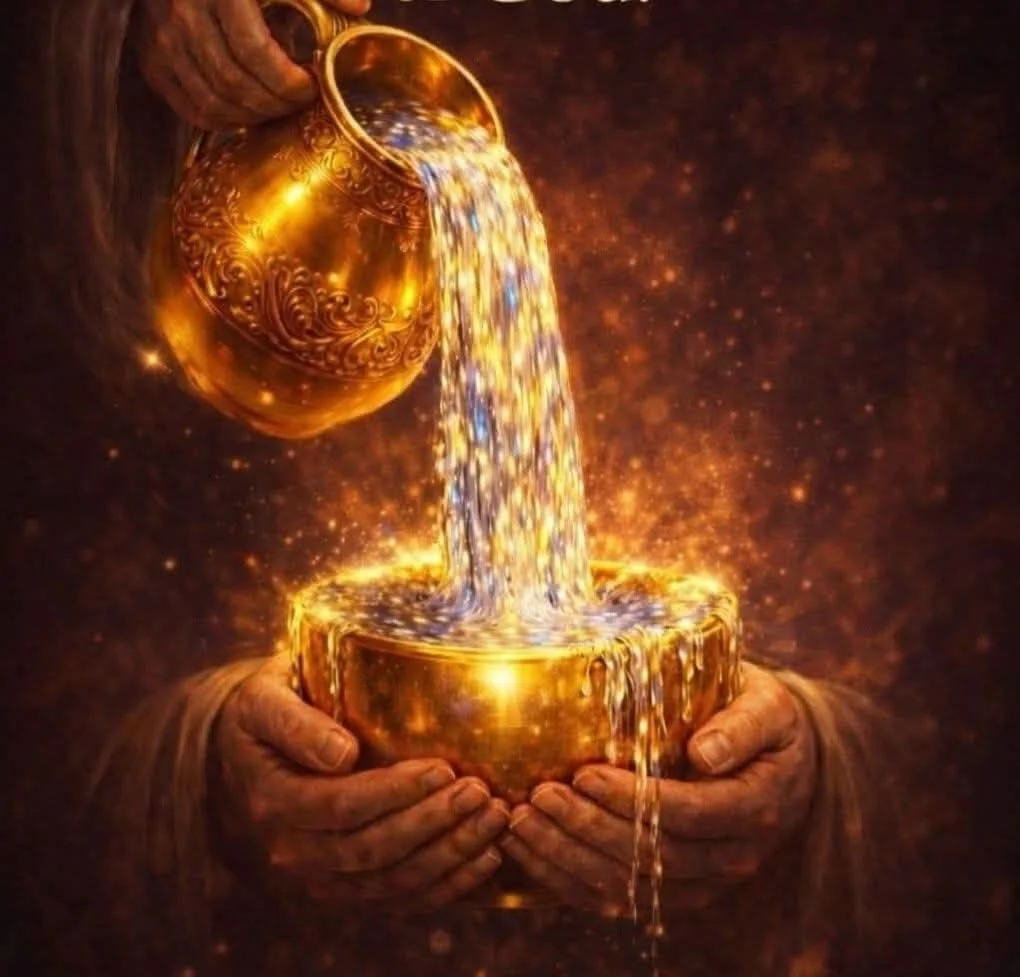
Imagine trying to pour fresh water into a cup that is already full. There may be abundance available to us, but if our lives are already overflowing- with possessions, commitments, expectations, distractions, old beliefs, obligations or even our definitions of what we need- there may be very little room to receive anything new.
Sometimes abundance begins not by asking:
“HOW CAN I GET MORE?”
but:
“WHERE CAN I NEED LESS?”
Where could I simplify? What am I holding that no longer serves me? What am I maintaining simply because I’ve become accustomed to having it? Where has more actually become something I have to manage?
Creating space doesn’t guarantee that something specific will arrive to fill it. Rather, it increases our capacity to notice, receive and make use of opportunities and resources when they do arrive.
And sometimes the space itself is the abundance.
Less clutter can create spaciousness. Few obligations can create time. Less spending can create financial margin. Less comparison can create contentment. Less noise can create attention.
So perhaps the question isn’t always:
“What can I add to my life?”
Perhaps sometimes it is:
“WHAT CAN I RELEASE SO THAT WHAT MATTERS HAS SOMEWHERE TO LAND?”
When we can recognize that we’re holding more than we need, we can intentionally allow some of that excess to move- to someone who can use it , somewhere it can serve a purpose, or simply out of our lives. Then abundance becomes less like a stockpile and more like breathing.
RECEIVE. USE. APPRECIATE. RELEASE. CREATE SPACE. RECEIVE AGAIN.
ABUNDANCE IN CIRCULATION
Some abundance is meant to move. Money received can support another person’s work. Food can nourish another family. Knowledge received can eventually be taught to someone else. A kindness given to us can inspire another kindness somewhere completely unrelated.
CIRCULATION ALLOWS SOMEONE TO RECEIVE.
Receiving isn’t the opposite of giving. It is part of the same movement. Without receiving, there can be no circulation.
Perhaps abundance, then, isn’t simply about accumulating as much as possible.
Perhaps it is a relationship between:
NEED-ENOUGH-ABUNDANCE-STEWARDSHIP-CIRCULATION-RECEIVING
AND AROUND IT GOES.
Instead of only asking- “How can I create more abundance?”
TRY- “What is enough for me?”
Because abundance isn’t waiting for us in the future; sometimes we’ve already crossed the line and simply haven’t recognized it yet.